Crisis Impact: What Early Research Reveals About the Effectiveness of Modern Crisis Response Systems
Community Service Board of Middle Georgia
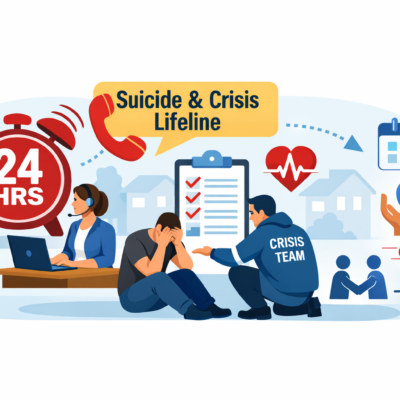
More than five years after the national rollout of the 988 Suicide & Crisis Lifeline, early research is beginning to clarify the measurable impact of coordinated crisis response systems. Emerging evidence demonstrates that timely outreach—particularly within the first 24 hours following identification of suicide risk—is strongly associated with faster care entry, increased treatment engagement, and sustained reductions in suicidal ideation and related symptoms. This article reviews recent findings on crisis system effectiveness and explores their relevance for community-based behavioral health providers, including rural systems such as those operated by the Community Service Board of Middle Georgia.
The launch of the 988 Suicide & Crisis Lifeline marked a significant shift in how the United States responds to behavioral health crises. Designed to provide immediate access to trained crisis counselors, the system has continued to evolve through local policy innovations, alternative response models, and expanded data tracking.
As utilization of crisis services has increased, attention has shifted from call volume alone to measurable outcomes. Recent research examining crisis outreach following suicide risk screening provides important insight into how timely intervention affects engagement and recovery. One study found that individuals who received successful contact from a care navigator within 24 hours of a suicide risk flag experienced faster entry into care, higher levels of treatment engagement, and sustained reductions in suicidal ideation, depression, and anxiety symptoms (Oss, 2026).
The data revealed meaningful differences based on response timing. Individuals contacted within 24 hours experienced a 17% recurrence of suicidal ideation, compared to 22.6% among those who were not reached within that window. Early contact was also associated with a significantly higher likelihood of follow-up care, with individuals more than twice as likely to attend at least one mental health appointment within the subsequent six months when outreach occurred promptly.
Ongoing engagement with crisis response systems further demonstrated protective benefits. Among individuals with continued contact, 91% reported that routine check-ins helped keep them safe, and 80% indicated that these interactions prevented further suicide attempts (Oss, 2026). These findings underscore the value of crisis systems not only as points of immediate intervention but also as ongoing sources of support.
Across a six-month follow-up period, 87.3% of individuals identified with suicidal ideation attended at least one mental health appointment, with a median time of 6.9 days to initial care. While some individuals who were not immediately reached still sought services independently, outcomes were consistently stronger among those who received timely, proactive outreach.
For community-based behavioral health providers—particularly those serving rural regions—these findings reinforce the importance of rapid response capacity, care navigation, and sustained follow-up. Investment in these areas supports earlier engagement, reduces symptom recurrence, and improves overall outcomes. For the Community Service Board of Middle Georgia, this evidence aligns with ongoing efforts to strengthen crisis response collaborations, enhance coordination across systems, and ensure timely access to care throughout the sixteen counties we serve.
As crisis response systems continue to evolve, research increasingly confirms that speed, persistence, and compassion matter. Timely outreach saves lives, and sustained engagement strengthens recovery. Community-based organizations play a critical role in translating these insights into localized, responsive systems that meet the needs of individuals and families during their most vulnerable moments.
References
Oss, M. E. (2026, February 6). Crisis impact. OPEN MINDS.