Discovering the Power of Nutrition in Recovery
Community Service Board of Middle Georgia (CSBMG)
March is recognized as National Nutrition Month, an annual observance that encourages individuals to explore the role nutrition plays in overall health and well-being. The 2025 theme, “Discover the Power of Nutrition,” highlights the importance of making informed food choices and developing sustainable eating habits. While this message is valuable for the general population, it carries a deeper and more complex meaning for individuals navigating eating disorders and recovery.
For those experiencing eating disorders, nutrition is often not simply about food—it becomes intertwined with control, fear, and emotional distress. Eating disorders can disrupt an individual’s ability to nourish themselves adequately, impacting consistency, portion intake, and dietary variety. These challenges are often intensified by societal influences such as diet culture, which can promote harmful beliefs that food must be earned, restricted, or controlled (The Emily Program, 2025).
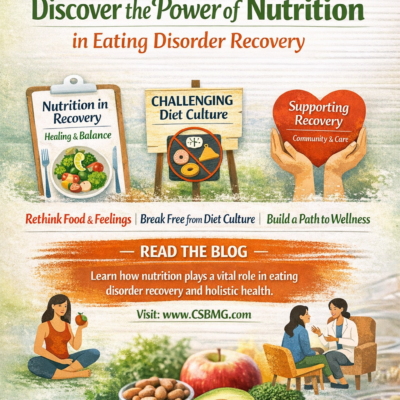
Nutrition as a Component of Recovery
Recovery from an eating disorder requires more than physical stabilization; it involves rebuilding a healthy and sustainable relationship with food. Nutritional rehabilitation is a critical component of this process. It focuses on restoring regular eating patterns, improving nutritional intake, and reintroducing flexibility into food choices. Although this work can be challenging, it serves as a foundation for both physical healing and emotional resilience.
Reclaiming nutrition in recovery often means shifting perspectives. Instead of viewing food as a source of anxiety or control, individuals are encouraged to see it as essential fuel for the body and mind. This shift can support improved cognitive functioning, emotional regulation, and overall health outcomes.
Challenging Diet Culture
Diet culture remains a significant barrier to recovery. Messages that glorify restriction, equate worth with body size, or promote unrealistic standards can reinforce disordered eating behaviors. For individuals in recovery, these messages can undermine progress and create additional challenges in maintaining balanced nutrition.
Promoting a healthier narrative around food—one that emphasizes nourishment, balance, and self-compassion—is essential. Encouraging individuals to listen to their bodies, honor hunger cues, and practice flexibility can help counteract harmful societal influences.
Supporting Recovery in Our Communities
At the Community Service Board of Middle Georgia (CSBMG), we recognize that recovery is a journey that requires comprehensive support. This includes access to behavioral health services, education, and community resources that promote whole-person wellness. Addressing eating disorders and related challenges requires collaboration among providers, families, and community partners to ensure individuals receive the care they need.
National Nutrition Month serves as an important reminder that nutrition is not just about food—it is about healing, empowerment, and creating sustainable pathways to wellness. By fostering awareness and reducing stigma, we can help make recovery more accessible and achievable for all.
If you or someone you know is struggling with disordered eating or related behavioral health concerns, support is available. Seeking help is a vital first step toward recovery and long-term well-being.
References
The Emily Program. (2025). Between bites: National Nutrition Month. https://emilyprogram.com