
Distracted Driving: Protecting Lives Through Safer Choices
Community Service Board of Middle Georgia (CSBMG)
Distracted driving remains one of the most preventable dangers on the road. Although many people immediately think of texting and driving, distraction involves much more than handheld phone use. Any activity that takes a driver’s eyes, hands, or mind away from the task of driving can increase the risk of a crash. For communities across Georgia, distracted driving is both a public safety issue and a reminder of how everyday choices can affect individual and family well-being.
In Georgia, the Hands-Free Georgia Act prohibits drivers from physically holding or supporting a wireless telecommunications device while operating a vehicle. The law also prohibits writing, sending, or reading text-based communications and watching, recording, or broadcasting videos while driving (Georgia Department of Driver Services, n.d.). While this law addresses one major source of distraction, it does not eliminate the many other behaviors that can place drivers and passengers at risk.
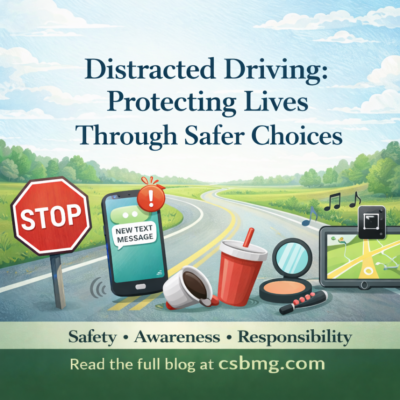
Distracted driving can take many forms. Common examples include eating or drinking, grooming, adjusting music or climate controls, reaching for dropped items, interacting with passengers or pets, using navigation tools, smoking or vaping, and even turning to observe roadside activity. The April 2026 DOAS Loss Control Bulletin emphasizes that any task diverting full attention from driving can become a distraction, not just electronic device use. This is an important distinction because it broadens the conversation from legal compliance to personal responsibility.
AAA offers practical guidance for reducing distracted driving and encouraging safer habits behind the wheel. Their recommendations include securing loose items before beginning a trip, adjusting mirrors and climate controls in advance, finishing grooming at home, securing children and pets before departure, and putting cell phones away before driving. AAA also recommends that drivers pull over safely if another activity requires immediate attention rather than trying to manage it while the vehicle is in motion (AAA Exchange, n.d.). These strategies are simple, but they can make a meaningful difference in reducing preventable risk.
For behavioral health organizations like CSBMG, distracted driving awareness also connects to the broader themes of stress, decision-making, and personal wellness. Many distractions occur when people are rushed, emotionally preoccupied, overstimulated, or trying to multitask. Choosing to slow down, prepare ahead of time, and remain focused while driving supports not only physical safety but also healthier daily routines. Safe driving is a form of self-care and community care.
Prevention begins with awareness, but it must continue with action. Drivers can reduce distractions by silencing phones, planning routes before leaving, securing food and personal belongings, and giving themselves enough time to travel without feeling rushed. Parents, caregivers, and team leaders can also model attentive driving habits for others. When communities take distracted driving seriously, they help create safer roads for everyone.
At CSBMG, promoting health and safety includes encouraging choices that protect lives both inside and outside the workplace. Distracted driving is avoidable, and every focused decision behind the wheel matters. By giving the road our full attention, we help protect ourselves, our passengers, and the communities we serve.
References
AAA Exchange. (n.d.). Tips for preventing distracted driving. AAA.
Georgia Department of Administrative Services. (2026, April). DOAS loss control bulletin: Topic of the month—Distracted driving.
Georgia Department of Driver Services. (n.d.). Chapter 2: Traffic laws & safe driving.