
Protective Factors: Helping Young People Thrive
Community Service Board of Middle Georgia (CSBMG)
Introduction
It is well known and documented that mental wellness is strengthened through connection. Young people who feel supported by family, culture, community, and trusted relationships are better equipped to navigate stress, adversity, and life transitions.
The Steve Fund highlights the importance of “protective factors,” which are the relationships, environments, and daily practices that build resilience and emotional strength
What Are Protective Factors?
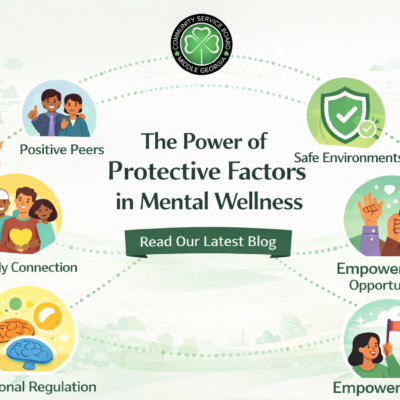
Protective factors are positive supports that help buffer the effects of stress and reduce mental health risks. These include:
- Family connection
- Positive peer relationships
- Cultural identity
- Faith and spirituality
- Safe community environments
- Emotional regulation skills
- Opportunities for empowerment
These factors help young people build confidence, improve coping skills, and feel a stronger sense of belonging.
The THRIVE Framework
CSBMG appreciates the practical value of the Steve Fund’s THRIVE Framework, which promotes youth well-being through six pillars:
- T — Thrive Together
- H — Healthy Habits
- R — Rooted in Resilience
- I — Identity & Self-Love
- V — Voice & Choice
- E — Empower & Engage
This framework reinforces the idea that mental health support extends beyond crisis intervention and includes daily protective practices that strengthen the whole person.
CSBMG’s Community Perspective
At CSBMG, we see protective factors at work across schools, families, outpatient clinics, peer support services, and youth-focused programs. Every trusted relationship and every moment of connection contributes to long-term wellness outcomes.
By strengthening these supports early, we can help young people move beyond simply coping and toward truly thriving.
References
The Steve Fund. (2026). Protective factors digital toolkits: A positive approach to mental health. https://stevefund.org/