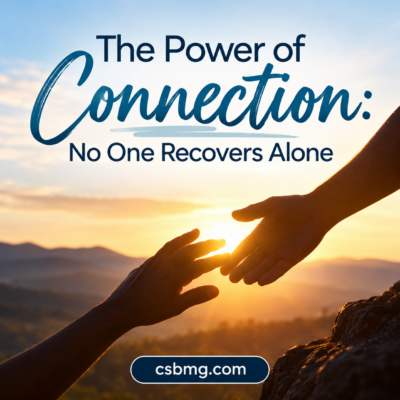
The Power of Connection: No One Recovers Alone
Community Service Board of Middle Georgia (CSBMG)
Recovery is a deeply personal journey, but it is not one that individuals must navigate alone. Meaningful relationships, supportive communities, and a sense of belonging play important roles in emotional wellness and long-term recovery.
According to the Substance Abuse and Mental Health Services Administration (SAMHSA, 2024), community is one of the four major dimensions of recovery, emphasizing relationships and social networks that provide support, friendship, love, and hope.
Feelings of isolation and discouragement can create additional challenges for individuals experiencing substance use disorders. However, supportive relationships with family members, friends, peer specialists, and recovery groups can provide encouragement, understanding, and accountability. The National Institute on Alcohol Abuse and Alcoholism (NIAAA, n.d.) recognizes that participation in mutual support groups can reinforce professional treatment and provide continued social support.
For some individuals, spirituality and faith also provide strength throughout recovery, while others find hope through shared experiences and community engagement.
At the Community Service Board of Middle Georgia (CSBMG), programs such as the RISEUP Recovery Support Center demonstrate the importance of peer connections and lived experiences in strengthening resilience and promoting recovery.
Recovery is strengthened through connection. Sometimes, the most powerful reminder of hope is simply knowing that someone understands and that no one has to face life’s challenges alone.
References
National Institute on Alcohol Abuse and Alcoholism. (n.d.). Long-term recovery support. Alcohol Treatment Navigator. https://alcoholtreatment.niaaa.nih.gov/support-through-the-process/long-term-recovery-support
Substance Abuse and Mental Health Services Administration. (2024, November 25). About recovery. https://www.samhsa.gov/substance-use/recovery/about