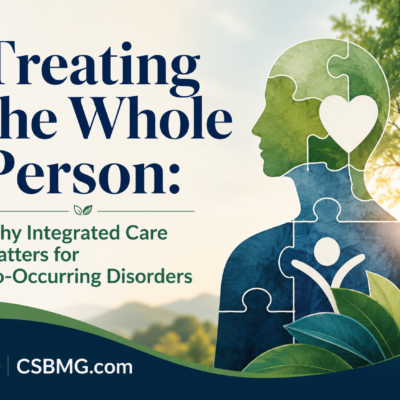
Treating the Whole Person: Why Integrated Care Matters for Co-Occurring Disorders
Community Service Board of Middle Georgia
When individuals seek treatment for substance use disorders, they often face more than addiction alone. Mental health conditions such as anxiety, depression, post-traumatic stress disorder (PTSD), bipolar disorder, or other behavioral health challenges frequently occur alongside substance use disorders. These are known as co-occurring disorders, also referred to as dual diagnoses, and they require a comprehensive, integrated approach to treatment.
According to the Hazelden Betty Ford Foundation (2026), as many as 65% of individuals with substance use disorders also experience a co-occurring mental health condition. This statistic reinforces what behavioral health professionals have recognized for years: recovery is most successful when both conditions are treated simultaneously rather than independently.
Understanding Co-Occurring Disorders
Mental health disorders and substance use disorders often influence one another in complex ways. Some individuals begin using alcohol or drugs in an attempt to manage symptoms of anxiety, depression, trauma, or other emotional distress. Others develop mental health challenges after prolonged substance use alters brain chemistry and emotional functioning. Regardless of which condition develops first, each can intensify the other if left untreated.
Historically, mental health treatment and addiction treatment were frequently provided through separate systems of care. Individuals were often expected to address one condition before receiving treatment for the other. Research and clinical experience have shown that this fragmented approach can delay recovery and increase the likelihood of relapse (Hazelden Betty Ford Foundation, 2026).
The Value of Integrated Treatment
Integrated treatment recognizes that recovery involves caring for the whole person. Instead of separating mental health services from addiction treatment, providers coordinate care through one comprehensive treatment plan.
Integrated care may include:
- Individual and group counseling
- Psychiatric evaluation and medication management
- Evidence-based substance use treatment
- Trauma-informed care
- Family education and involvement
- Peer support services
- Relapse prevention planning
- Long-term recovery support
By addressing both conditions together, individuals are better equipped to understand the relationship between their mental health and substance use, develop healthier coping strategies, and build lasting recovery.
Recovery Is About More Than Symptom Management
The Hazelden Betty Ford Foundation’s next-generation treatment model emphasizes that recovery extends beyond treating symptoms. Lasting recovery also depends on fostering meaningful relationships, strengthening family connections, building supportive communities, and creating a sense of belonging (Hazelden Betty Ford Foundation, 2026).
This whole-person approach aligns closely with today’s behavioral health best practices. Recovery is strengthened when individuals have access to stable housing, employment opportunities, supportive relationships, peer recovery communities, and healthcare providers who collaborate across disciplines.
For many individuals, recovery becomes sustainable when treatment addresses physical health, emotional wellness, social support, and personal purpose—not simply substance use alone.
The Role of Families
Families often play a critical role in recovery. Education helps loved ones better understand both addiction and mental illness while reducing stigma and improving communication.
Family participation can:
- Improve treatment engagement
- Strengthen healthy boundaries
- Encourage long-term recovery
- Increase understanding of relapse prevention
- Build stronger support systems at home
When families heal alongside the individual, recovery outcomes often improve for everyone involved.
Building Hope Through Comprehensive Care
At the Community Service Board of Middle Georgia (CSBMG), we recognize that recovery is not one-size-fits-all. Individuals experiencing co-occurring disorders deserve compassionate, evidence-based care that addresses every aspect of their well-being.
Integrated behavioral healthcare offers individuals the opportunity to receive coordinated services that acknowledge the complexity of their experiences while empowering them to build healthier, more fulfilling lives. By treating both mental health conditions and substance use disorders together, providers can reduce barriers to care, improve recovery outcomes, and help individuals achieve long-term wellness.
Recovery is possible. When treatment addresses the whole person—and when individuals, families, providers, and communities work together—hope becomes the foundation for lasting healing.
References
Hazelden Betty Ford Foundation. (2026). Co-occurring disorders facts for families. https://www.hazeldenbettyford.org
Hazelden Betty Ford Foundation. (2026). How Hazelden Betty Ford is taking steps towards integrated treatment. https://www.hazeldenbettyford.org