Understanding Co-Occurring Disorders: Healing Through Integrated Care and Connection
Community Service Board of Middle Georgia (CSBMG)
Introduction
Recovery is often described as a journey, but for many individuals, that journey includes navigating more than one challenge at a time. Co-occurring disorders—also known as dual diagnoses—refer to the presence of both a substance use disorder and a mental health condition. These conditions frequently occur together, and understanding their connection is essential to promoting long-term recovery and overall wellness.
At the Community Service Board of Middle Georgia (CSBMG), we recognize that healing is most effective when care is compassionate, comprehensive, and tailored to the whole person.
The Reality of Co-Occurring Disorders
Many individuals in recovery experience both mental health challenges and substance use disorders simultaneously. These conditions often share underlying factors such as trauma, stress, genetics, and environmental influences. When left untreated or addressed separately, one condition can worsen the other, making recovery more difficult.
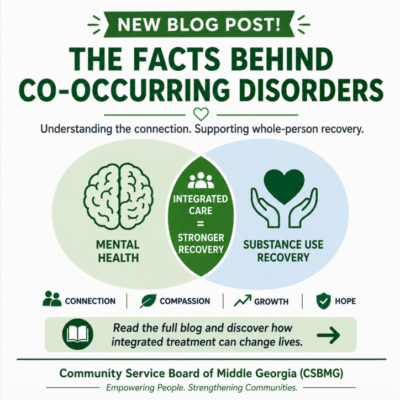
Research consistently supports the importance of integrated treatment approaches that address both conditions at the same time. Treating mental health and substance use disorders together improves outcomes, reduces relapse rates, and strengthens long-term stability (Substance Abuse and Mental Health Services Administration [SAMHSA], 2020).
Understanding the signs of co-occurring disorders—such as mood changes, withdrawal, substance misuse, and difficulty functioning in daily life—can empower individuals and families to seek help earlier.
The Power of Integrated Treatment
Recovery stories often highlight a common truth: lasting sobriety is closely connected to mental wellness. Integrated treatment models combine behavioral health therapy, substance use treatment, and supportive services into a coordinated approach.
This type of care may include:
- Individual and group counseling
- Medication management
- Peer support services
- Case management and care coordination
- Family involvement and education
Integrated care allows individuals to address the root causes of their challenges while building coping strategies and support systems that promote long-term recovery.
Connection and Purpose in Recovery
Recovery is not only about treatment—it is also about connection. Many individuals find that healing deepens when they build meaningful relationships and engage in purposeful activities.
Acts of service, peer support, and community involvement can strengthen recovery by:
- Reinforcing a sense of belonging
- Building self-worth and confidence
- Creating accountability and structure
- Encouraging continued personal growth
Giving back to others can be a powerful part of the recovery journey, transforming lived experiences into sources of strength and inspiration.
Accessing Recovery Resources
Ongoing support is a key component of sustained recovery. Community-based resources, virtual meetings, workshops, and recovery-focused events provide opportunities for continued engagement and learning. These resources help individuals and families stay connected, build skills, and maintain progress over time.
CSBMG encourages individuals to explore available support systems, including peer groups, counseling services, and community partnerships that promote wellness and recovery.
When Immediate Help Is Needed
If you or a loved one is struggling with substance use or mental health challenges, reaching out for help is a critical first step. Crisis resources and support services are available to provide immediate assistance during times of need.
The National Suicide Prevention Lifeline offers free, confidential support 24/7 for individuals experiencing emotional distress or crisis. Connecting with trained professionals can provide guidance, safety, and hope during difficult moments.
Conclusion
Co-occurring disorders are complex, but recovery is possible with the right support, understanding, and care. By addressing both mental health and substance use together, individuals can build a stronger foundation for lasting wellness.
At CSBMG, we remain committed to providing integrated, person-centered services that empower individuals to heal, grow, and thrive. Through connection, compassion, and comprehensive care, recovery becomes not just possible—but sustainable.
References
Substance Abuse and Mental Health Services Administration. (2020). Substance use disorder treatment for people with co-occurring disorders. U.S. Department of Health and Human Services.