
Understanding Population Health: Why Data Matters for Behavioral Health and Community Well-Being
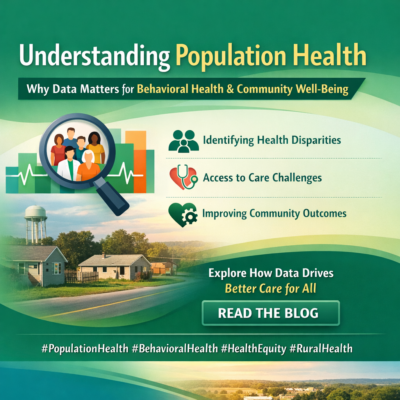
Population health has become a widely used term in modern health care discussions. However, because it is applied in so many different contexts, its meaning can sometimes become unclear. Population health is formally defined as the health outcomes of a group of individuals and the distribution of those outcomes within that group (Oss, 2026). Understanding how health outcomes vary across different populations is essential for health care organizations seeking to improve care delivery, reduce disparities, and strengthen community health.
For behavioral health organizations such as the Community Service Board of Middle Georgia (CSBMG), population health data provides critical insight into how mental health, physical health, and social factors interact to shape the well-being of communities. These insights are particularly important as health care systems continue to move toward value-based reimbursement models, which increasingly reward providers for improving outcomes rather than simply delivering services (Oss, 2026).
Population Health and Health Disparities
Population health analysis highlights disparities that exist across different demographic groups. These disparities often appear in life expectancy, infant mortality, access to care, and the prevalence of chronic conditions.
Research examining health outcomes by race and ethnicity has identified significant differences in life expectancy. For example, American Indian or Alaska Native populations have an average life expectancy of approximately 70.1 years, and Black populations average around 74.0 years, compared with 78.4 years for White populations (Oss, 2026). These statistics illustrate the complex relationship between social conditions, access to care, and long-term health outcomes.
Maternal and infant health disparities are also evident. Black and American Indian or Alaska Native infants are at least twice as likely to die as White infants, and pregnancy-related mortality rates are more than three times higher among Black women (Oss, 2026). These disparities highlight the urgent need for targeted health interventions and culturally responsive care.
Access to Care and Behavioral Health
Access to health care services also varies widely across populations. Studies show that 36% of Hispanic adults, 25% of American Indian or Alaska Native adults, and 22% of Native Hawaiian or Pacific Islander adults report not having a personal health care clinician, compared with 16% of White adults (Oss, 2026). Insurance coverage also varies significantly. Among individuals under the age of 65, American Indian or Alaska Native and Hispanic populations are more than twice as likely to be uninsured compared with White individuals (Oss, 2026).
Behavioral health services show similar disparities. Among adults experiencing any form of mental illness, White adults receive mental health treatment at higher rates (58%) compared with Hispanic (44%), Black (39%), and Asian (33%) populations (Oss, 2026). These differences can be influenced by factors such as stigma, provider shortages, insurance coverage, transportation barriers, and limited culturally competent services.
In rural regions these barriers can be even more pronounced. Limited provider availability, transportation challenges, and socioeconomic factors often affect whether individuals can access behavioral health services.
Why Population Health Data Matters
For health care leaders and policy makers, population health data provides the foundation for effective decision-making. By analyzing health outcomes across populations, organizations can identify high-risk groups, address care gaps, and develop targeted interventions that improve community health outcomes.
Population health data is also essential for organizations participating in value-based care models, where reimbursement is increasingly tied to quality outcomes and cost efficiency (Oss, 2026). In these models, health systems must understand not only individual patient needs but also broader patterns affecting entire communities.
Behavioral health organizations play a particularly important role in this work because mental health conditions are closely linked to many physical health outcomes, including cardiovascular disease, chronic illness, and overall life expectancy.
Moving Toward Whole-Person Care
Improving population health requires a whole-person care approach, which integrates physical health, behavioral health, and social determinants of health. Factors such as housing stability, food access, employment, transportation, and community support systems significantly influence health outcomes.
Organizations across the country are increasingly adopting integrated care models that combine behavioral health treatment with primary care, case management, and community-based support services. These approaches can improve outcomes while reducing overall health care costs.
For community organizations like CSBMG, embracing population health strategies means continuing to strengthen partnerships with health systems, community organizations, and local governments to address the social and behavioral factors that shape health.
Looking Ahead
As health care systems face growing budget pressures and increasing demand for services, population health data will become even more important. Leaders across provider and payer organizations must use this information to guide strategic decisions, allocate resources effectively, and design services that meet the needs of diverse communities.
Ultimately, improving population health is not just about treating illness—it is about understanding the broader factors that influence health and creating systems that support long-term well-being for entire communities.
For organizations serving rural and underserved populations, this work represents both a challenge and an opportunity to build healthier, more resilient communities.
References
Oss, M. E. (2026, March 6). Population health by population. OPEN MINDS.