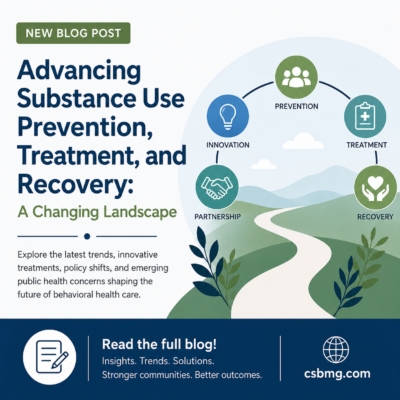
Advancing Substance Use Prevention, Treatment, and Recovery: A Changing Landscape
Community Service Board of Middle Georgia (CSBMG)
Introduction
Substance use prevention, treatment, and recovery efforts across the United States are rapidly evolving in response to emerging research, policy changes, and shifting community needs. From innovative treatment models to expanding federal and state initiatives, the behavioral health field is experiencing significant transformation. For organizations like CSBMG, staying informed on these developments is essential to delivering effective, person-centered care that supports long-term recovery outcomes.
Expanding the Continuum of Care
The substance use continuum of care continues to broaden, incorporating prevention, early intervention, treatment, and sustained recovery supports. National, state, and local conversations emphasize the importance of client engagement, digital health innovations, and strategic partnerships to improve outcomes. Events such as behavioral health conferences highlight collaboration among clinicians, researchers, policymakers, and technology experts to advance care delivery and strengthen systems of support.
For CSBMG, this reinforces the value of integrated services that meet individuals where they are, whether through outpatient care, crisis stabilization, peer support, or community-based recovery programs.
Policy Shifts and Emerging Treatments
Recent federal policy developments signal a growing focus on innovative approaches to substance use and mental health treatment. At the same time, gaps in coverage remain a concern. For example, insurance payer limitations on non-hospital residential treatment highlight ongoing disparities in access to care, particularly for older adults. These challenges underscore the need for continued advocacy and system-level improvements to ensure equitable treatment access.
Addressing Emerging Public Health Concerns
As the substance use landscape evolves, new public health concerns continue to emerge. The rapid expansion of legalized gambling has raised alarms about increasing rates of gambling disorder, often described as a potential “next epidemic” due to insufficient screening and treatment infrastructure .
Additionally, changes in drug use patterns—such as the shift from injection to smoking substances—have introduced new risks, including severe burn injuries that complicate prevention and treatment efforts. The development of increasingly potent synthetic substances further challenges healthcare systems to adapt quickly to a volatile and unpredictable drug supply.
Strengthening Recovery Through Measurement and Innovation
Research continues to emphasize the importance of measuring recovery outcomes to improve care systems. New approaches, such as tracking “recovery capital” and using metrics like proportion of remission, provide a more comprehensive understanding of an individual’s progress and quality of life. These tools allow providers to move beyond abstinence-only models and recognize incremental progress as meaningful and impactful .
Emerging treatments also show promise. Studies examining GLP-1 receptor agonists suggest potential benefits in reducing substance use by targeting brain reward pathways. While research is ongoing, these findings highlight the importance of innovation and continued investment in evidence-based practices.
The Role of Community-Based Organizations
Community-based organizations like CSBMG play a critical role in translating national trends into local action. By integrating prevention, treatment, and recovery supports, CSBMG helps individuals navigate complex systems while addressing the social determinants of health that influence recovery outcomes.
Collaboration remains key. Partnerships with healthcare providers, housing agencies, law enforcement, and community coalitions strengthen the overall system of care and ensure individuals receive comprehensive, coordinated support.
Conclusion
The future of substance use prevention, treatment, and recovery is defined by innovation, collaboration, and a commitment to whole-person care. While challenges such as policy gaps and emerging drug trends persist, advancements in research and treatment provide new opportunities to improve outcomes.
For CSBMG, remaining engaged in these developments ensures the organization continues to deliver high-quality, responsive services that meet the evolving needs of the communities it serves. By embracing evidence-based practices and fostering strong community partnerships, CSBMG can help build a more resilient and recovery-oriented system of care.
References
Substance Use Monthly. (2026). Prevention, treatment and recovery updates.