Flipping the Script on Addiction: Changing the Narrative to Support Recovery
Community Service Board of Middle Georgia (CSBMG)
Introduction
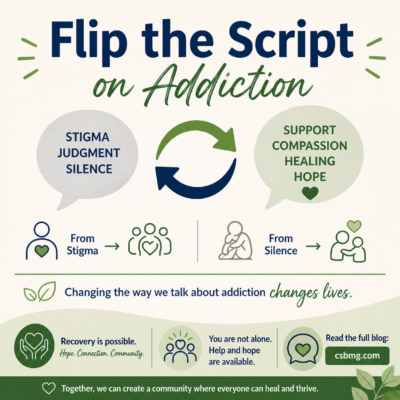
Addiction has long been surrounded by silence, stigma, and misunderstanding. These barriers not only impact individuals living with substance use disorders but also affect families, communities, and access to care. Recent thought leadership from Hazelden Betty Ford Foundation emphasizes the importance of “flipping the script” on addiction—shifting the narrative from shame to hope, and from judgment to understanding (Piper & Gardner, 2025).
At the Community Service Board of Middle Georgia (CSBMG), this perspective aligns with our commitment to person-centered care, recovery support, and community education. Changing how we talk about addiction is not just a communication strategy—it is a pathway to healing.
The Power of Language in Recovery
Language plays a critical role in shaping how addiction is perceived and treated. Terms rooted in blame or moral failure can reinforce stigma and discourage individuals from seeking help. In contrast, person-first and recovery-oriented language promotes dignity, respect, and inclusion.
Piper and Gardner (2025) highlight that when individuals are described as “people in recovery” rather than defined by their condition, it creates space for identity beyond addiction. This shift encourages individuals to feel seen, valued, and capable of change.
For CSBMG, integrating compassionate language across services—from outpatient care to peer support programs—helps foster environments where recovery can thrive.
Breaking the Silence: Stories of Hope and Healing
Addiction often thrives in silence, but recovery grows through connection and shared experience. Storytelling is a powerful tool that helps normalize recovery journeys and reduce feelings of isolation.
Programs that incorporate lived experience—such as peer support services—demonstrate that recovery is possible and sustainable. Hearing stories of resilience allows individuals and families to replace fear with hope.
At CSBMG, initiatives like the SPIRIT Peer Program, SPARK and MONARCH Adult Peer Supports, SOAR Clubhouse, and Emerging Adult Den and HUB Peer Programs, and community collaboratives such as Loving Our Community Coalition (LOCC) reflect this approach by creating safe spaces for dialogue, education, and shared healing.
Navigating the Roadblocks of Early Recovery
Early recovery can present significant challenges, including emotional triggers, stress, and environmental influences. Without support, these obstacles can increase the risk of relapse.
Research and recovery resources emphasize that structured support systems—such as counseling, peer groups, and family involvement—are essential for maintaining progress (Hazelden Betty Ford Foundation, 2025). Accountability and connection provide individuals with the tools needed to navigate these early stages successfully.
CSBMG supports individuals through a continuum of care that includes outpatient treatment, crisis services, and recovery-oriented programs designed to meet people where they are.
Relationships, Recovery, and Realistic Expectations
Recovery also involves rebuilding relationships and developing healthy interpersonal dynamics. Covington and Carlisle (2025) note that unrealistic expectations in relationships can create emotional strain and hinder growth.
Healthy relationships require:
- Honest and consistent communication
- Shared values
- Mutual support for personal growth
Understanding the difference between idealized perceptions and reality helps individuals form stronger, more sustainable connections during recovery. This relational healing is a key component of long-term wellness.
Community, Connection, and Continued Growth
Recovery does not happen in isolation. Ongoing engagement in community resources, events, and support networks plays a critical role in sustaining long-term success.
Opportunities such as support meetings, workshops, retreats, and alumni programs provide continued encouragement and education. These connections reinforce the idea that recovery is not a destination but a lifelong journey.
CSBMG encourages individuals and families across Middle Georgia to stay connected through local resources, peer programs, and collaborative partnerships that promote wellness and resilience.
When Immediate Support Is Needed
In moments of crisis, immediate support is essential. Individuals experiencing emotional distress or substance use challenges should seek help right away.
Resources include:
- 988 Suicide & Crisis Lifeline (call or text 988)
- Local behavioral health providers such as CSBMG ( call 478-272-1190)
- Emergency services when safety is at risk (call 911)
Access to timely, compassionate care can make a life-saving difference.
Conclusion
Flipping the script on addiction requires a collective effort to challenge stigma, embrace compassion, and elevate voices of recovery. By changing the way we speak about addiction, we create environments where individuals feel empowered to seek help and pursue healing.
At CSBMG, we remain committed to promoting recovery through education, connection, and whole-person care. When we replace shame with understanding and silence with support, we open the door for individuals, families, and communities to heal—together.