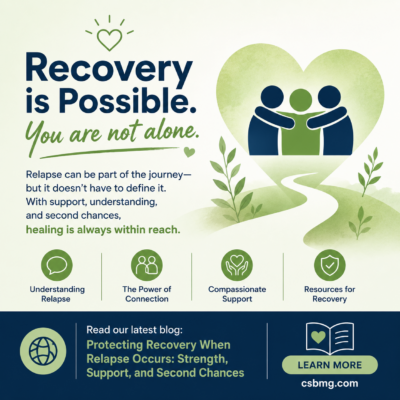
Protecting Recovery When Relapse Occurs: Strength, Support, and Second Chances
Community Service Board of Middle Georgia (CSBMG)
Introduction
Recovery is not always a straight path. For many individuals navigating substance use or behavioral health challenges, relapse can be part of the journey. While relapse often brings feelings of fear, guilt, or shame, it is important to recognize that it does not represent failure. Instead, it can serve as an opportunity for reflection, growth, and renewed commitment to recovery (Hazelden Betty Ford Foundation, 2026).
At the Community Service Board of Middle Georgia (CSBMG), we believe recovery is a process supported by compassion, education, and community. Understanding relapse—and how to respond to it—can make all the difference in sustaining long-term wellness.
Understanding Relapse as Part of the Recovery Process
Relapse is more common than many realize. It often occurs when individuals encounter triggers, stressors, or emotional challenges that overwhelm their current coping strategies. Rather than viewing relapse as a setback, it should be seen as a signal that additional support or adjustments in care may be needed (Hazelden Betty Ford Foundation, 2026).
Early warning signs may include:
- Increased stress or emotional distress
- Withdrawal from support systems
- Changes in routine or behavior
- Romanticizing past substance use
Recognizing these signs early allows individuals and their support networks to intervene before a full relapse occurs.
The Power of Connection: Learning from Lived Experience
Many individuals in recovery initially believe they can manage challenges alone. However, as highlighted in personal recovery stories, healing often begins when individuals allow others to be part of their journey.
For example, individuals like Steve—a successful professional who once believed treatment was unnecessary—have shared that opening up to support systems transformed fear into connection and long-term healing (Hazelden Betty Ford Foundation, 2026).
This reinforces a critical message:
Recovery thrives in connection, not isolation.
At CSBMG, peer support programs, counseling services, and community partnerships help ensure that no one has to navigate recovery alone.
Addressing Overdose with Compassion and Awareness
One of the most critical aspects of relapse is the increased risk of overdose, particularly after a period of abstinence. Tolerance levels may decrease, making previously used amounts dangerous or even fatal.
Understanding overdose risks and warning signs can save lives. Key indicators may include:
- Unresponsiveness or unconsciousness
- Slow or irregular breathing
- Blue or pale skin tone
- Choking or gurgling sounds
Immediate action—such as calling emergency services and administering life-saving interventions like naloxone—can prevent tragedy. Open conversations about overdose, free from stigma, empower individuals and families to act quickly and effectively (Hazelden Betty Ford Foundation, 2026).
Recovery Resources and Continued Support
Ongoing engagement in recovery-focused activities plays a vital role in maintaining progress. Across the country, organizations offer opportunities for connection, education, and growth, including:
- Virtual recovery meetings and alumni support groups
- 12-step sessions and peer-led discussions
- Educational workshops and family programming
- Retreats and recovery-centered events
Locally, CSBMG continues to expand access to behavioral health services, peer support, and harm reduction initiatives across our 16-county service area. These resources are designed to meet individuals where they are and provide support at every stage of recovery.
When to Seek Help
If you or a loved one is struggling with substance use or experiencing a relapse, seeking help early can prevent further harm and support a return to recovery. Professional services, peer support, and crisis resources are available and effective.
For immediate assistance:
- Call 988, the Suicide and Crisis Lifeline, for mental health or substance use crises
- Contact local behavioral health providers, including CSBMG at 478-272-1190, for ongoing support and treatment options
Conclusion
Relapse does not define a person’s recovery—it is a moment within a much larger journey. With the right support, education, and compassion, individuals can move forward stronger and more resilient than before.
At CSBMG, we remain committed to walking alongside individuals and families through every stage of recovery. By reducing stigma, increasing awareness, and expanding access to care, we help transform moments of struggle into opportunities for healing and growth.
References
Hazelden Betty Ford Foundation. (2026). Recovery resources and relapse education materials.