
Strengthening Schizophrenia Care Through Peer Support: A Person-Centered Path Forward
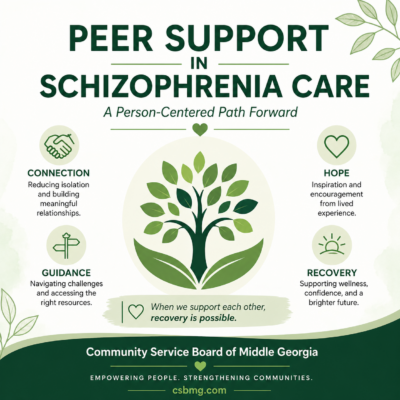
Community Service Board of Middle Georgia (CSBMG)
Introduction
Schizophrenia affects nearly 3 million people in the United States, yet many individuals continue to experience fragmented care, inconsistent access to services, and profound social isolation. While clinical advancements have improved symptom management, long-term recovery often depends on something equally powerful: human connection, trust, and hope. Recent guidance from the National Council for Mental Wellbeing, developed in collaboration with Bristol Myers Squibb, highlights peer support as one of the most promising strategies for closing critical gaps in schizophrenia care.
At CSBMG, this person-centered model strongly aligns with our commitment to recovery, resilience, and community-based support systems that help individuals thrive beyond diagnosis.
Why Peer Support Matters in Schizophrenia Care
Traditional treatment models are essential, but they do not always address the day-to-day challenges individuals face when living with schizophrenia. Difficulties with social connection, stigma, transportation, trust in providers, and navigating complex systems can all interrupt continuity of care.
According to the National Council’s March 2026 white paper, trained peer support workers—individuals with lived experience in mental health recovery—help bridge these gaps by offering emotional support, practical guidance, advocacy, and hope. Their lived experience often allows them to build trust quickly and help individuals remain connected to treatment and community resources.
For many people, peer support transforms care from a clinical transaction into a relationship-centered recovery journey.
A Strong Fit for the CCBHC Model
The white paper specifically highlights the success of peer support integration within Certified Community Behavioral Health Clinics (CCBHCs). These settings are uniquely positioned to support individuals with schizophrenia because they combine crisis care, therapy, psychiatric services, case coordination, and community-based recovery supports under one system.
This is especially meaningful for organizations like CSBMG, where integrated care and coordinated behavioral health services are foundational to our mission.
Peer support workers strengthen the CCBHC framework by helping individuals:
- engage in services earlier
- remain connected after crisis episodes
- reduce social isolation
- improve treatment retention
- build confidence in recovery
- navigate housing, transportation, and daily living supports
These are critical factors in improving quality of life and reducing preventable hospitalizations.
Key Recommendations for Behavioral Health Leaders
The white paper outlines several practical recommendations for healthcare leaders, policymakers, and peer support programs seeking to expand peer services for individuals dealing with schizophrenia diagnosis. These include:
- clearly defining peer support roles within care teams
- investing in workforce development, supervision, and fair compensation
- improving referral pathways and service visibility
- measuring both quantitative outcomes and personal recovery narratives
- advocating for sustainable Medicaid reimbursement and policy reform
For CSBMG, these recommendations reinforce the value of strengthening our recovery-oriented workforce and continuing to invest in peer-led models that reflect dignity, lived experience, and empowerment.
The Power of Hope in Recovery
One of the most meaningful strengths of peer support is its ability to restore hope. Individuals living with schizophrenia often face years of stigma, misunderstanding, and disconnection. Peer professionals model the possibility of recovery through lived testimony, relational trust, and consistent support.
This aligns closely with CSBMG’s belief that recovery is not only possible, but strengthened when individuals feel seen, understood, and connected to people who truly understand the journey.
When systems of care intentionally include lived experience, recovery becomes more personal, more compassionate, and more sustainable.
Conclusion
The future of schizophrenia care must extend beyond symptom stabilization and embrace whole-person, relationship-centered recovery systems. As the National Council for Mental Wellbeing’s new white paper emphasizes, peer support is not an optional enhancement—it is an evidence-informed, human-centered strategy that improves engagement, continuity, and outcomes.
At CSBMG, we remain committed to advancing innovative models that strengthen community connection, empower lived experience, and help every individual move toward hope, wellness, and recovery.
References
National Council for Mental Wellbeing. (2026, March 24). Advancing person-centered care: Peer support in schizophrenia care in certified community behavioral health clinics.
Bristol Myers Squibb, & National Council for Mental Wellbeing. (2026). A new era in schizophrenia care: Advancing evidence-based care models.