Support for the Supporters: Because Family Healing Matters
Community Service Board of Middle Georgia (CSBMG)
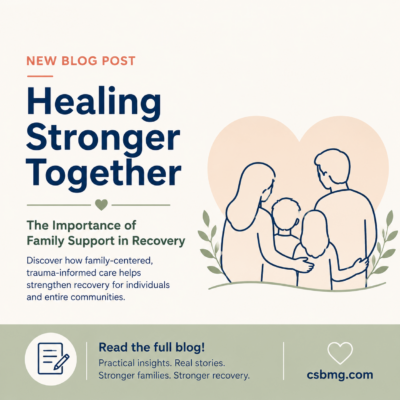
Recovery is often viewed as an individual journey, but research and lived experience consistently show that healing is most effective when families are included in the process. Substance use disorders and mental health challenges impact not only the individual but also the family system as a whole. When families are supported, educated, and engaged, they become a powerful force in sustaining long-term recovery.
At the Community Service Board of Middle Georgia (CSBMG), we recognize that family-centered, trauma-informed care strengthens outcomes and promotes healing across generations.
The Role of Family in Recovery
Family involvement plays a critical role in recovery outcomes. According to the Hazelden Betty Ford Foundation, individuals are more likely to maintain recovery when their loved ones are actively engaged in the healing process. Family members often serve as a primary source of emotional support, accountability, and encouragement, all of which contribute to sustained wellness (Hazelden Betty Ford Foundation, 2026).
However, families may also experience confusion, frustration, or emotional strain when trying to support a loved one. Without proper guidance, these challenges can unintentionally create conflict or reinforce stigma.
Trauma-Informed Family Support
Trauma-informed care acknowledges that both individuals and families may carry the effects of past experiences. Effective family programming focuses on:
- Understanding addiction as a health condition rather than a moral failing
- Reducing blame, shame, and stigma
- Teaching healthy communication and boundary-setting
- Providing tools to support recovery without enabling harmful behaviors
Programs designed with these principles help families move from crisis and conflict toward connection and understanding. As emphasized by Hazelden Betty Ford Foundation (2026), education and support empower families to participate in recovery in ways that are constructive and sustainable.
The Importance of Access and Giving
Access to treatment remains a significant barrier for many individuals and families. Financial limitations often prevent people from seeking or continuing care. Initiatives such as Giving Day campaigns highlight the importance of community support in expanding access to services. Even small contributions can help connect individuals to life-saving treatment and recovery resources (Hazelden Betty Ford Foundation, 2026).
Stories from individuals and families who have experienced recovery underscore the lasting impact of accessible care. Giving back becomes deeply personal when recovery transforms not only one life, but an entire family system.
Community, Connection, and Ongoing Support
Recovery does not end after treatment—it is an ongoing process that requires continued connection and support. Resources such as alumni groups, workshops, and family-focused events provide opportunities for individuals and their loved ones to grow together.
Examples of recovery support opportunities include:
- Virtual alumni meetings and peer support groups
- Family education workshops and retreats
- Community events focused on recovery awareness and connection
These resources reinforce the idea that recovery is a shared journey, strengthened by community involvement and consistent engagement.
Crisis Resources and Immediate Support
For individuals and families facing immediate challenges, access to crisis support is essential. The National Suicide Prevention Lifeline provides confidential, 24/7 support for individuals in distress. Immediate access to help can be a critical step in stabilizing situations and connecting individuals to ongoing care.
Conclusion
Supporting families is not an optional component of recovery—it is essential. When families are equipped with knowledge, compassion, and practical tools, they become partners in the healing process.
At CSBMG, we remain committed to strengthening family systems through trauma-informed care, community collaboration, and accessible services. Because when families heal, recovery grows stronger—and communities become healthier.
References
Hazelden Betty Ford Foundation. (2026). Support for the supporters: Because family healing matters.